
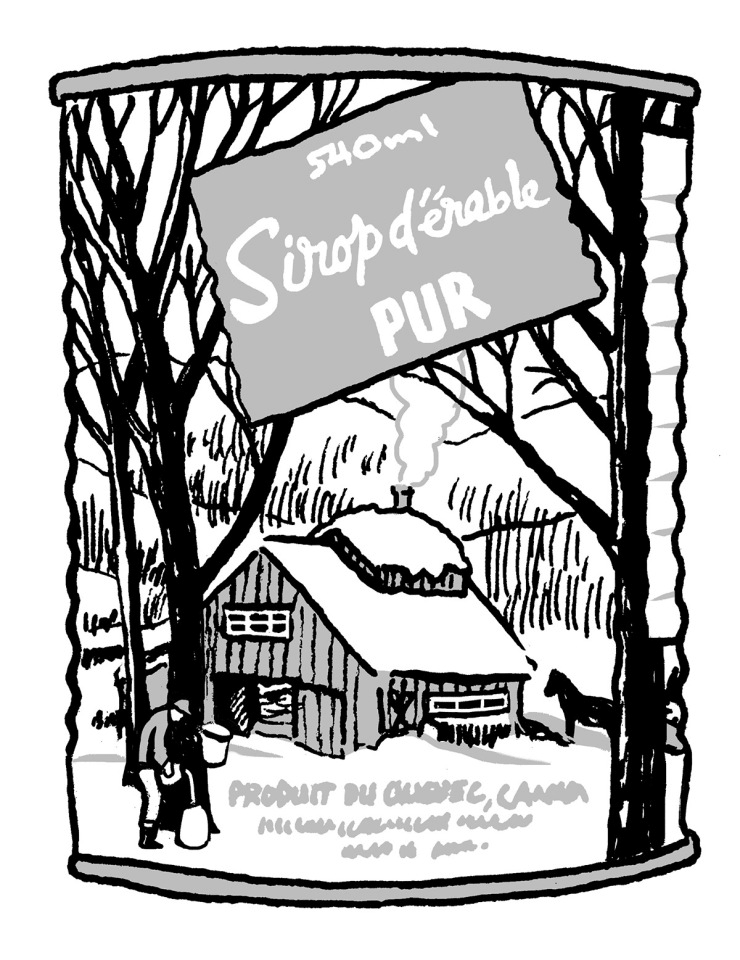
Blending history, culture and science in a story that stretches from eastern Canada and into the northeastern US, Maple Syrup stands as a testament to the resilience, communal joy and economic intricacies that define maple syrup, and is the perfect read for anyone who loves Canada, its heritage and the irresistible taste of spring.
– Maple Syrup: A Short History of Canada’s Sweetest Obsession by Peter Kuitenbrouwer, Doubleday Canada
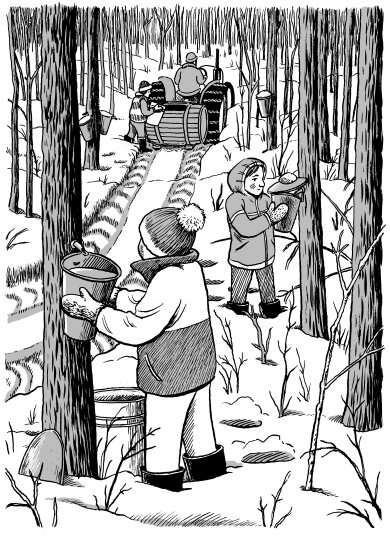
A book about maple syrup has been taking shape in my head for a long time. The sticky stuff got into my bloodstream at an impressionable age. My elder sisters and I, children of immigrants who became itinerant hippies, weathered a tumultuous time as kids, rarely living anywhere for more than a year or two. Then my mother and stepfather bought a farm in a hardwood forest in west Quebec and decreed we would make maple syrup. In spring we struggled through snowbanks taller than us to gather maple sap. We boiled the sap into syrup. The endurance and patience the task required unified and gratified our family. Maple syrup lives in me as a proxy for happiness, stability and community.
After high school I left the farm and became a journalist. During the many years I worked at newspapers, I found myself increasingly drawn to write about the trees and forests of Canada, one of the world’s great forest nations. After decades of interviewing the experts, I wanted to join them.
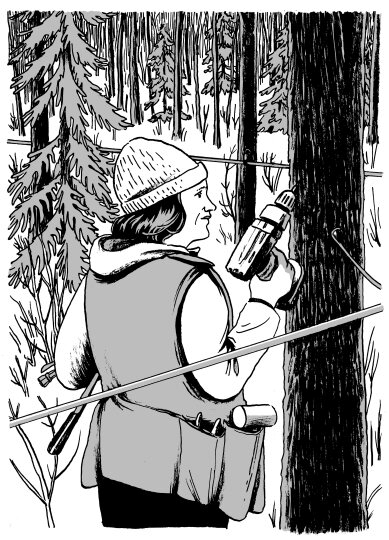
In my fifties I graduated from the University of Toronto with a Master of Forest Conservation; I am now a registered professional forester. My deeper understanding of forests and how they thrive has driven me further to unpack the issues that underpin the success and the future of Canada’s most unique forest product: maple syrup. My wife and I now have our own farm where our children and our neighbours help us make syrup for family and friends every spring. This ritual grounds me in a tempestuous world. But while I love the stuff, I had a lot to learn to tell the story of maple syrup.History books have heroes. This book’s first heroes are Canada’s Indigenous Peoples, such as the Anishnaabe women of Manitoulin Island in the Georgian Bay who have known for millennia how to extract sap from the sugar maple tree and transform it into a sweetener, a skill they taught the colonists from Europe. Sugaring off, the English translation of the Indigenous word for this age-old ritual, has shaped the identity of Canada.
…
A luxury product around the world, maple syrup, even in Canada, is something of a treat. A friend said that when his three children were little and the family sat down for pan- cakes on a weekend morning, they guarded the maple syrup for adult use only. The kids got corn syrup—until they were old enough to demand the good stuff, that is. Our family lucked out: At the French public school our children attended in Toronto, a parent had an uncle in Quebec and would take orders for pure maple syrup, bringing it in by the case. Canada and the United States produced equivalent quantities of maple syrup until World War II. After the war Canadian production increased, while in the States syrup production flatlined. Today the vast majority of the world’s maple syrup comes from Canada, specifically Quebec. This concentration of sweet maple wealth in a system controlled by a powerful federation has led to theft, rebellion and debate about quality versus quantity. Furthermore, foresters like me worry what effects climate change will have on maple syrup, dependent as the industry is on the freeze–thaw cycle of spring. We must reduce our greenhouse gas emissions to save the national lifeblood that is maple syrup.
The future of the sticky stuff is anything but clear.