
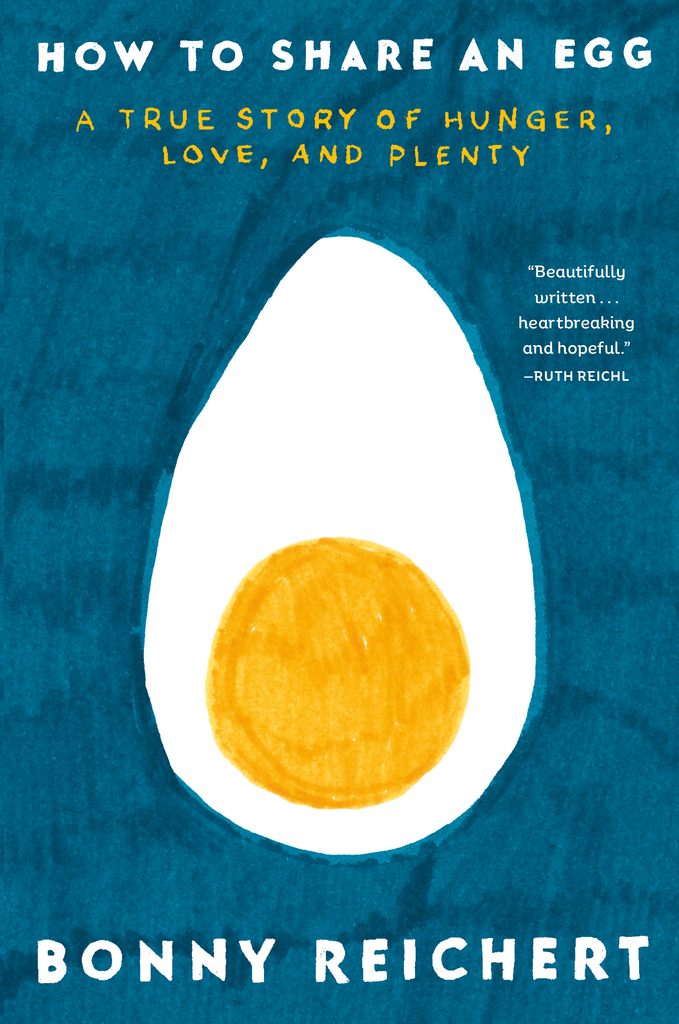
A moving culinary memoir about the relationship between food and family—and sustenance and survival—from a chef, award-winning Canadian journalist, and daughter of a Holocaust survivor. How to Share an Egg by Bonny Reichert is a journey of deep flavors and surprising contrasts. By turns sweet, salty, sour, and bitter, this is one woman’s search to find her voice as a writer, chef, mother and daughter.
Prologue:
Imagine two boys—a couple of skeletons, really—roaming the German countryside. One is fourteen, the other, a little older. It’s the spring of 1945, and they haven’t eaten much besides potato peels and coffee grounds for three years. They knock on door after door until they find a farmer who goes into his kitchen and brings some-thing back: a single brown egg. One egg for two starving boys.
The day before begging for the egg, my dad and his cousin Abe were hiding in a hayloft. The date was May 7. The boys could hear planes through the barn’s patchy roof; they didn’t know it, but the gates of concentration camps throughout Europe had already been pried open. The soldiers in charge of guarding my dad’s dwindling cohort were running—running from the Russians and running from the Americans, running from their own certain capture or death— and they were taking their prisoners with them. The SS didn’t want Jews talking about all that had happened to them, and the German war machine counted on their slave labor to the bitter end. Dad’s march had begun at Gleiwitz, an Auschwitz subcamp, where he had been forced to carry steel railway ties with his emaciated shoulders and bare hands.
Each evening, the soldiers found a farmer to house them for a few hours before hurrying off in the morning, dragging along any prisoners who’d survived the night. The prisoners often slept in open fields, but on this particular night, my dad and his cousin slipped into a barn. They climbed to the hayloft and brought up the ladder behind them.
“Raus, raus,” the soldiers called in the morning, the standard come-out-before-I- shoot-you greeting. Dad and Abe didn’t move. The soldiers must have counted their prisoners. They must have known two were missing. They came into the barn with pitchforks, piercing and tearing at the ground below the hayloft. The boys stayed hidden, and the steel tines found nothing but hay.
Dad thinks it might have been the next morning when voices called to them again. “Raus! Come out! We want to help you!” After five and a half years of abuse and terror, the boys were not convinced, and they stayed hidden. Only when the voices switched to English did Dad and Abe tumble down from the hayloft and out the barn door to find a jeep with a white star on it. Standing in the field were not the SS but American soldiers. The Germans had just surrendered, and the Americans were sweeping the countryside, searching for survivors. What does my father remember about this moment of liberation, eighty years ago? What he ate, of course. “I was so hungry, but the only food they had was a big jar of green relish,” he says. “I ate and ate until I was sick.”
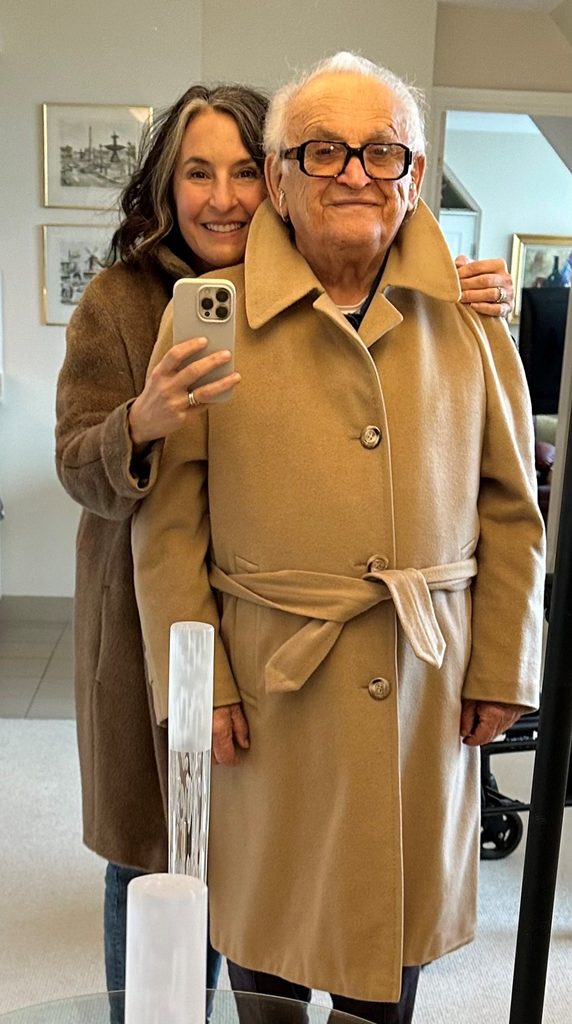
When you have a father with stories like these, and you happen to be a writer, you know what you’re supposed to do. I was always going to write Dad’s book, to tell his incredible story. Capturing the tale of survival for future generations was not only my role, but my duty. My privilege. And yet, there was always a reason to put it off.
“When are we going to start the book?” he’d ask.
“Soon, Dad. Soon.”
Excerpted from How to Share an Egg by Bonny Reichert. Copyright © 2025 Bonny Reichert. Published by Appetite by Random House®, a division of Penguin Random House Canada Limited. Reproduced by arrangement with the Publisher. All rights reserved.