
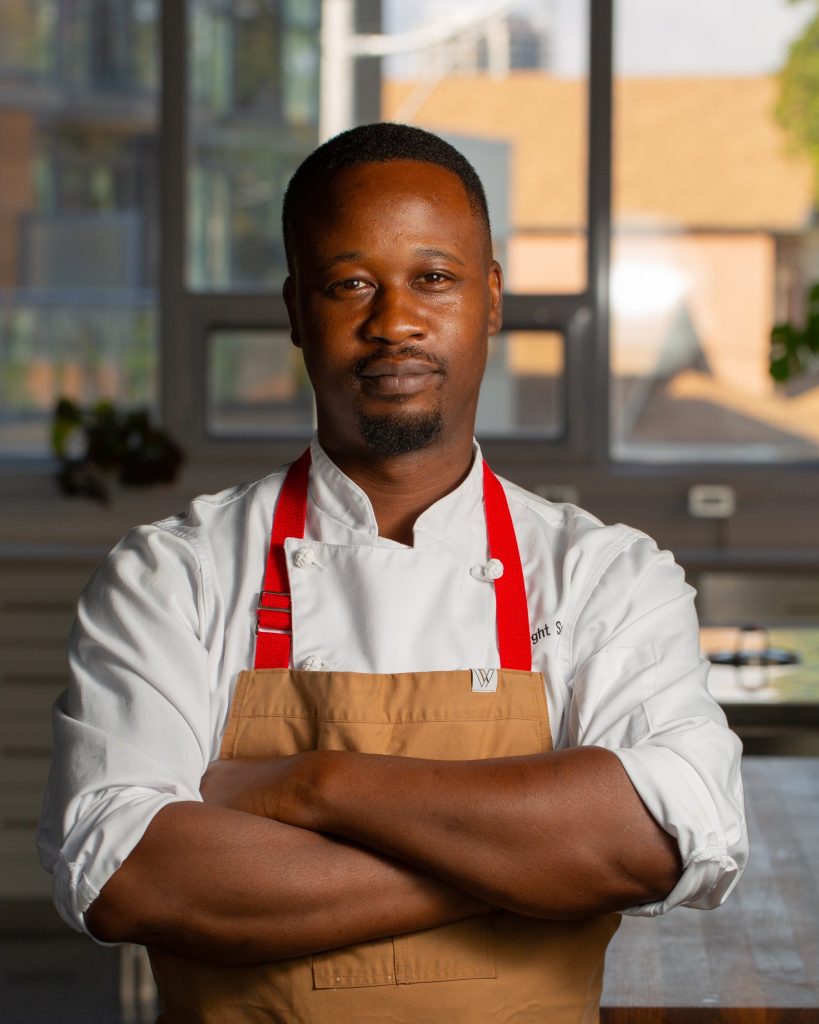
Chef Dwight has been making waves across the culinary scene, from being the guest judge on Top Chef to showcase beef patties, to being a CBC Life contributor, to being a series judge on the Food Network Show, Bake Master Battle, to creating viral recipe videos across all his channels that garner millions of views.
He is a Toronto-based culinary expert and content creator with over 15 years of experience and a prestigious Red Seal certification. A graduate of George Brown College, Dwight has honed his skills alongside renowned chefs like Patrick Kriss, Anthony Walsh, Michael Bonacini, and Michael Noble.
Today, he leverages social media to make gourmet cooking accessible to home
cooks, sharing viral recipes with over 1.8 million followers, across his channels, who seek to elevate their culinary experiences. Chef Dwight’s passion for vibrant flavors and culinary storytelling inspires kitchen adventures everywhere.
Why are you excited to host the 2026 Taste Canada Cooks the Books student cooking competition presented by Canada Beef?
As a graduate of George Brown College’s culinary program, I know firsthand what it’s like to be a student finding your way in this industry. Supporting the next generation of chefs has always been incredibly important to me, and there’s something really special about watching young talent grow, evolve, and accomplish things they once only dreamed about. I see a lot of myself in these students, and being able to celebrate their hard work and play even a small role in their journey is something that genuinely brings me a lot of joy.
Cooks the Books gives emerging talent an opportunity to share their ideas with a live audience. Why are platforms like this important for students beginning their careers?
I think one of the most important things we can do as an industry is create opportunities for young chefs to be seen and heard. There are so many talented students out there who simply haven’t had the platform or opportunity to showcase what they’re capable of. Events like Cooks the Books help amplify those voices, build confidence, and open doors that might not otherwise be available. Sometimes all someone needs is an opportunity to show the world what they can do.
This year’s theme is “Global Flavours Grow in Canada.” What does that theme mean to you, and what does it reveal about Canadian food culture?
To me, this theme really celebrates the diversity of Canadian food culture and the incredible ingredients we have access to right here at home. We’re fortunate to live in a country where so many cultures and culinary traditions come together, and I think there’s something beautiful about taking those global influences and bringing them to life through locally grown and produced ingredients. I’m a big believer in supporting Canadian farmers, shopping locally whenever possible, and allowing the seasons to influence the way we cook. We live in a world where almost everything is available year-round, but I think there’s real value in reconnecting with seasonality and appreciating what’s being grown in our own backyard.
Food can carry personal histories, cultural traditions and memories from one generation to the next. How can emerging chefs use a dish to tell those stories?
I’ve always believed that some of the most meaningful food comes from embracing your roots and cultural identity. Food is such a powerful way to connect with where we come from, whether that’s through the flavours we grew up eating, the techniques passed down through generations, or the dishes our grandparents used to make. I love seeing young chefs take those traditions and put their own modern interpretations on them. For me, the plate is an open canvas, and there are no rules about who can cook what, but there’s something especially powerful about creating a dish that reflects a part of your own story.
You describe yourself as a culinary storyteller. What does storytelling through food mean to you, and how do you bring a story to life on the plate?
For me, storytelling through food is about creating a connection that goes beyond what’s on the plate. My Jamaican heritage has always been a huge influence on the way I cook, and I love finding ways to bring those flavours, traditions, and memories into what I create. Sometimes that means putting a modern spin on something I grew up eating, and other times it’s about introducing people to an ingredient or technique they may have never experienced before. I think the beauty of food is that every dish has the potential to start a conversation, bring back a memory, or help someone understand a culture a little better.
A memorable dish can bring together flavour, technique, story and visual presentation. What’s one of your most memorable dishes?
One dish that really stands out to me is a mango meringue pie I created for one of my first pop-ups celebrating Black excellence and Caribbean heritage. At the time, I was the chef at Aloette, where we made a traditional lemon meringue pie, and I wanted to take that familiar dessert and give it a Caribbean twist. I swapped the graham cracker crust for an Ovaltine cookie crust, replaced the lemon filling with mango, and incorporated coconut and lime into the meringue. The response was incredible, and seeing how much people connected with the dish was such a rewarding moment. It reminded me that some of the best creativity comes from understanding the foundations of a dish and then finding ways to make it your own.
When you meet emerging talent at events like this, what excites you most about the next generation of Canadian food creators?
What excites me most is seeing just how far Canadian culinary talent has come and how much potential the next generation has. I genuinely believe that each generation of chefs is becoming more talented than the last. The ingredients we have access to, the restaurants young chefs have opportunities to work in, and the level of culinary education and creativity are constantly evolving. I love meeting young chefs, hearing about their experiences, and understanding where they want to take their careers. If I can offer a little advice, share a different perspective, or help open a door along the way, that’s incredibly rewarding. The future of Canadian food is in really good hands, and I’m excited to see where this next generation takes it.
What advice would you give students who are presenting their work under pressure in front of a live audience and judging panel?
My biggest advice would be to trust your training and stay true to yourself. When you’re competing in front of an audience or judging panel, it’s easy to get caught up in the pressure and feel like you need to do something completely outside your comfort zone. But those are the moments when you should double down on the skills, flavours, and techniques that got you there in the first place. Remember that the vast majority of people watching genuinely want to see you succeed. And if something doesn’t go according to plan, that’s okay too. I’ve competed in plenty of competitions I didn’t win, and I’ve made mistakes in front of audiences. The important thing is to learn from those experiences and come back better prepared for the next opportunity. A setback is only a failure if you don’t take anything away from it.
What is one lesson or mindset from your early days that you still carry with you today?
One lesson I’ve carried with me throughout my career is that hard work beats talent when talent doesn’t work hard. I wasn’t necessarily the most naturally gifted young chef, but I was always willing to put in the work and fully commit to whatever I was doing. I learned early on that being prepared, staying professional, listening, and understanding what mattered to the chefs I worked for were just as important as my technical abilities. When you show that level of commitment, people recognize it, and they’re much more willing to invest in your growth and give you opportunities. I also learned that you have to balance holding yourself accountable with giving yourself room to make mistakes. When you care deeply about your work, it’s easy to be your own toughest critic, but learning to bounce back, stay focused, and keep improving is what ultimately makes you better.