
Follow on IG
Cultured cream is known by many names in many cultures: sour cream in America, sauerrahm in Germany, crema agria in Latin America, smetana in Russia, and crème fraîche in France. It is a culturally significant food around the world, being a stepping-stone in the making of traditional butter. Often some of the thickened fermented cream would be spared the churning and instead added to soups, sauces, pastries, fresh fruit, or anything else, really, for cultured cream gracefully adds flavor, texture, and richness to just about every dish.
The sweet cream we know today may be a modern invention, coming to us only in the era of the centrifuge. It is indeed peculiar that fermented cream is known in French as crème fraîche, meaning “fresh cream.” But the name is a linguistic evidence of cream’s cultured history; for in pre-industrial France (pre-centrifuge, pre-pasteurization, pre-stainless-steel), cream was left to rise and ferment in the wooden barrel and could only be taken off the top once it had been soured and thickened. In France today the term crème fraîche is used for two different dairy products: crème fraîche liquide, still-pourable unfermented cream; and crème fraîche épaisse—thick, fully fermented, and decadently creamy, the real deal. Dip a strawberry in and decide which you prefer. Invariably, it’s the fermented cream that enrobes the berry best with a perfect coating of fluffy, flavorful fermented fat.
This is likely the simplest, most flavorful ferment that anyone can easily make at home, and a perfect one to start off the fall collection of fat-rich techniques. Simply add an active culture like clabber or kefir to cream, leave it to ferment at ambient temperatures, and voilà, your cream will thicken to a most luscious texture! It’s even easier, and certainly more delicious (and probably more nutritious) than whipping that cream, for the culture does the work of the whipping for you. Chilling the fermented cream makes it really stand tall.
Crème fraîche is probably the first fermentation I ever conjured, as a simple kitchen experiment, long before I realized that I was either making cheese or fermenting. For crème fraîche is a common chefs’ trick and is one of the few dairy fermentations regularly practiced in commercial kitchens. But why stop there, chefs? Any dairy product made in-house with fresh milk or cream is likely better than one purchased from larger industrial producers, who often don’t respect traditions of fermentation. Consider this an opening act for a wider in-house cheesemaking program, and dive into dairying whole-hog!
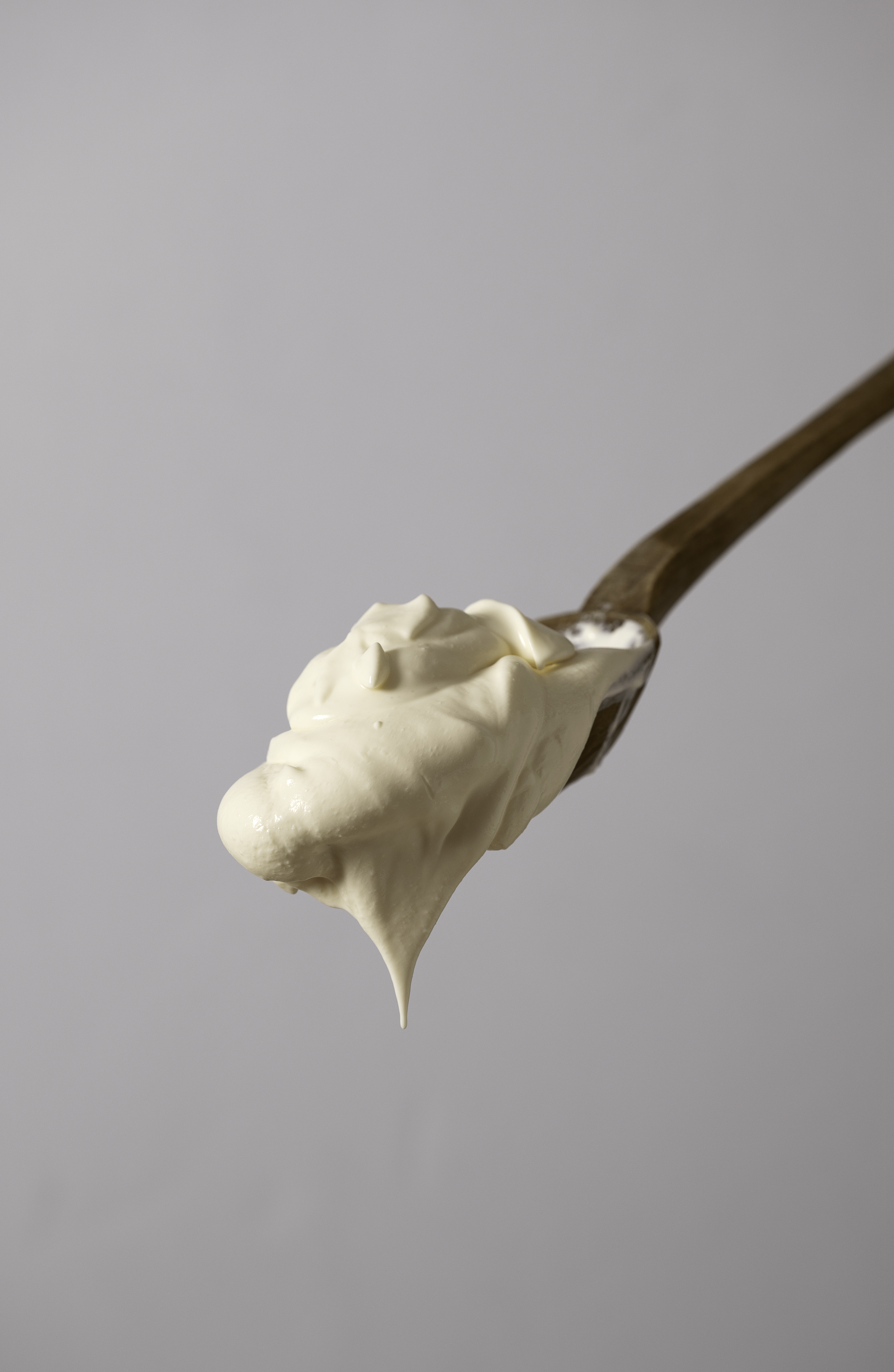
Cultured Cream
Ingredients
- A fermented milk ∙ 12- to 24-hour make
- Cream: 1 L
- Starter: 10 ml kefir clabber, or whey (1:100)
- Yield: 1 L cultured cream 1:1
Instructions
- Bring cream to culturing temperature, about 20°C (68°F).
- Add starter, mix in thoroughly.
- Leave cream to ferment until thick, 12 to 24 hours.
- Chill to preserve.
Notes